Decarbonising Hot Water: The Continuing Role of Natural Gas
Rinnai’s Chris Goggin discusses how natural gas can cover all domestic requirements whilst the national task of decarbonisation continues.
The UK remains heavily dependent on natural gas to heat properties and provide hot water. Official DESNZ statistics indicate that gas remained the principal source of UK electricity generation in 2024, at around 30.4% of total generation, although renewables reached a record share overall.
MCS and DESNZ data also show that boiler replacements continue to dominate the heating market, even as heat pump deployment is increasing from a lower base.
Although policy and grant support are accelerating heat pump adoption, via the Boiler Upgrade Scheme and the Future Homes Standard, gas boiler replacements still outnumber heat pump installations by a substantial margin in the existing stock. This means standalone gas boilers and systems are likely to continue playing a prominent role in UK heating in the near term, particularly in retrofit markets.
Natural gas is therefore likely to maintain a role in UK energy demand for the foreseeable future, even as the grid decarbonises. Britain’s gas network remains extensive, with around 285,000 km of transmission and distribution pipework serving roughly 23 million properties, which explains why proposals for transition often focus on managed repurposing or staged reduction rather than rapid abandonment of infrastructure.
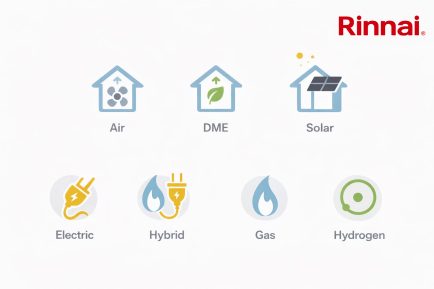
Hybrid technologies are another area of heating decarbonisation. In principle, a hybrid system can combine a boiler with a heat pump so that households and businesses can reduce emissions without moving immediately to a fully electric solution, which may not always be practical because of technical, economic or property-specific constraints. A hybrid heating system typically accepts two separate sources of energy, most commonly electricity via a heat pump together with natural gas or LPG via a boiler. These systems are designed to optimise performance according to variables such as outside temperature, current energy prices, and space-heating or domestic hot water demand.
In operational terms, a hybrid heating and hot water system combines technologies so that the heat pump can meet a larger share of demand in milder conditions, while the boiler can support peak loads or colder weather. In this way, the system can balance efficiency, comfort and resilience when correctly specified and controlled
This configuration can optimise the strengths of each technology under different weather and demand conditions; in particular, combustion-based water heating can help support domestic hot water performance where instantaneous or peak demand would otherwise be challenging for an all-electric system without further upgrades.
Using two energy sources in a single system can offer benefits for end users: One potential advantage is financial flexibility – where electricity prices are relatively high compared with gas, a well-controlled hybrid can help moderate running costs while still lowering emissions. Capital expenditure may also be lower than that of some full-electric retrofit options, depending on property characteristics and the extent of wider fabric upgrades required.
A further benefit for the end-user is that both lifecycles of each technology is lengthened. As each technology does not have to apply full effort to satisfy demand, component and overall system longevity will be increased due to a lessening of required workload.
Hybrid systems can therefore offer a practical transitional route towards emissions reduction. Where projects cannot fully decarbonise immediately because of practical, economic or technical constraints, combining renewable and conventional technologies may provide a staged pathway that lowers carbon while maintaining service continuity and user choice.
So, we believe natural gas still maintains a role in the landscape of UK energy consumption and will do for the foreseeable future. If hybrid technologies are widely adopted, traditional fuels will still play a significant role in heating and hot water provision, even when fossil fuels are being substituted for cleaner technologies.
The Rinnai design team offers product support with projects.
- Rinnai is exhibiting at elementalLONDON on 25-26 November