Selecting the Right Pressure Reducing Valve for Newbuild Housing
Altecnic’s Stephen Elsmore looks at the importance of correct PRV selection
Pressure Reducing Valves (PRVs) are often viewed as relatively small components within a domestic water system, yet they play a vital role in protecting pipework, fittings and appliances while maintaining a consistent water supply. As new-build developments become increasingly complex and water efficiency remains a key design consideration, selecting the correct PRV is no longer simply a design detail but an important specification decision that can influence the long-term reliability of the entire system.
Why pressure control matters
One factor that should never be overlooked during specification is the incoming mains water pressure. Water pressure can vary significantly across the UK depending on location, network demand and the time of day. While these fluctuations may go unnoticed by occupants, excessive pressure can place unnecessary strain on domestic water systems if left unmanaged.
For newbuild developments, inadequate pressure control can result in leaking fittings, water hammer, nuisance safety valve discharge, premature appliance wear and inconsistent outlet pressures. These issues not only increase maintenance costs but can also affect resident satisfaction after handover.
By maintaining a safe downstream pressure, a correctly specified PRV helps protect the plumbing infrastructure, reduce unnecessary wear on connected components and support reliable operation throughout the building.
Understanding the incoming water supply
Selecting the correct PRV begins with understanding the incoming water supply. Before specifying a valve, developers and contractors should measure both the static and dynamic mains pressure, as these values can vary considerably depending on the location of the development and demand on the local network.
Static pressure is measured when no water flows, while dynamic pressure is measured when water is being drawn from the system. Assessing both provides a clear understanding of how the supply performs under normal operating conditions, allowing the most appropriate PRV to be selected for the application.
Consider system demand
Pressure alone should not determine PRV selection. The expected flow demand of the building should also be considered to ensure the valve can supply sufficient water during periods of peak usage.
A single dwelling has very different requirements to a detached property with multiple bathrooms or a residential apartment development where simultaneous demand is significantly higher. Selecting a valve based solely on pipe size, without considering the required flow rate, can compromise system performance during peak demand.
Where developments include multiple apartments, integrated apartment control assemblies can simplify installation by combining pressure control with other key plumbing components, helping to deliver consistent performance across each dwelling.
Choose the right features
Not every PRV is designed for the same application, so selecting the right features is just as important as selecting the correct size.
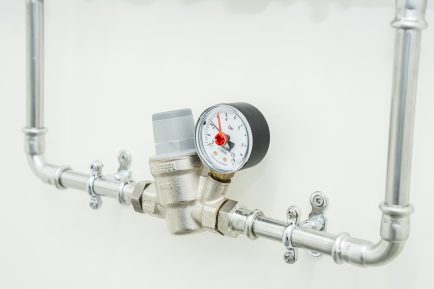
Features such as adjustable outlet pressure; integral strainers; pressure gauge ports; and removable cartridges can simplify servicing while supporting reliable long-term operation. Accessible components also make routine inspection and cartridge replacement quicker, helping reduce maintenance time over the life of the building.
For example, Caleffi’s Series 533, 535 and 536 PRVs provide different specification options for domestic applications, including adjustable outlet pressures, factory pre-set configurations and maintenance-friendly designs, enabling specifiers to select the most appropriate solution for each project.
Check compliance
Compliance should form part of every specification decision. PRVs intended for potable water systems should be water regulation approved (WRAS/KIWA) and selected in accordance with BS EN 1567, which specifies the performance requirements for pressure reducing valves used within building water systems.
Considering compliance alongside pressure conditions, flow demand and maintenance requirements helps deliver a robust specification from the outset.
Common specification mistakes
One of the most common specification errors is selecting a PRV based purely on pipe size, while overlooking the building’s actual flow demand. Similarly, assuming that one valve is suitable for every development can lead to inconsistent performance across different property types.
Another common oversight is failing to consider future service. Specifying a valve without adequate maintenance can make routine inspection and cartridge replacement more difficult once the building is occupied. Addressing these factors during specification helps avoid unnecessary work and long-term operational issues.
Long-term value
Selecting the correct PRV is an investment in the long-term reliability of a development rather than simply another component choice.
Correct specifications can reduce pressure-related issues, extend the life of connected appliances, minimise resident complaints and lower lifecycle costs by preventing problems before they occur. Taking the time to assess pressure conditions, flow demand and future maintenance requirements from the outset helps ensure domestic water systems continue to perform as intended throughout the building’s service life.
Manufacturer support
Manufacturers can support developers, consultants and contractors through technical guidance, specification advice, BIM content and CPDs, helping project teams make informed specification decisions.
At Altecnic, this support is complemented by the Technical Hub, which provides technical articles, installation guidance and product resources, alongside free CIBSE-accredited CPDs through the Altecnic Academy, helping industry professionals stay up to date with evolving regulations, specification best practice and modern water system design.
PRVs may be small components, but they have a significant influence on system performance. By considering pressure conditions, flow demand, compliance and long-term maintenance from the outset, developers and specifiers can reduce future risk, improve reliability and help ensure new-build housing performs as intended for years to come.